
Brand Architecture

The unexpected result of the branding work is how it works with our clients on a subliminal level and contributes to the value of our products.

Conor Toal

Marketing Director

Gold CityWealth Brand & Marketing Awards
Gold Transform Awards
Silver DBA Design Effectiveness Awards


We are a brand architecture agency based in London.

Brand architecture is a strategic question, not a naming exercise. The question is: how do you organise what you offer so that clients understand it instantly, trust it and buy more of it? When an organisation’s portfolio is unclear, too many names, overlapping products, technical jargon, no logic to how things connect, it creates friction at every stage of the sales process. Clients cannot see what they need. Partners cannot explain what you do. Internal teams pull in different directions. Good brand architecture removes that friction. It brings clarity to complexity and gives every part of your offer a clear role within the whole.


What makes brand architecture succeed

Brand architecture fails when it is designed around internal logic rather than client understanding. The way your organisation is structured internally is rarely the way your clients think about what they need. Our approach starts with the client perspective: how do your clients think about the problem they are trying to solve? What do they need to understand to buy confidently? What do they need to be able to tell their colleagues? From there we map your offer against those needs, deciding what to name, what to group, what to separate and what to simplify. The result is a portfolio that is easier to sell, easier to buy and easier to grow.


When you need to rethink your brand architecture

01 / Your clients cannot explain what you do

If your clients struggle to describe your offer to a colleague, you have an architecture problem. Clarity at this level is not cosmetic. It is commercial.


02 / Your portfolio has grown by acquisition

Each acquisition brings its own name, brand and logic. Without a clear architecture to hold it together, the whole becomes harder to sell than the sum of its parts.


03 / You are missing cross-selling opportunities

If clients do not know what else you offer, they cannot buy it. A clear brand architecture makes the full value of your relationship visible.


04 / You are launching something new

A new product, service line or division needs to fit logically within your existing offer, or it needs its own identity. Brand architecture defines which, and why.


What we do

Brand strategy and positioning
Understanding what you are trying to achieve and the market context you are operating in, before we touch the architecture.

Portfolio and architecture mapping
Defining how your brands, sub-brands, products and services relate to each other, and the logic that connects them.

Brand naming
Naming or renaming the entities within your portfolio so they communicate clearly and work together as a system.

Visual architecture
How the relationships between brands are expressed visually, through identity, colour, typography and endorsement systems.

Brand guidelines
Rules for how the architecture is applied consistently across every channel and context.


AMT-Sybex
AMT-Sybex created enterprise software for the global infrastructure and energy industries. The goal was investor-readiness, but the portfolio was a tangle of technical acronyms that meant nothing to anyone outside the business.

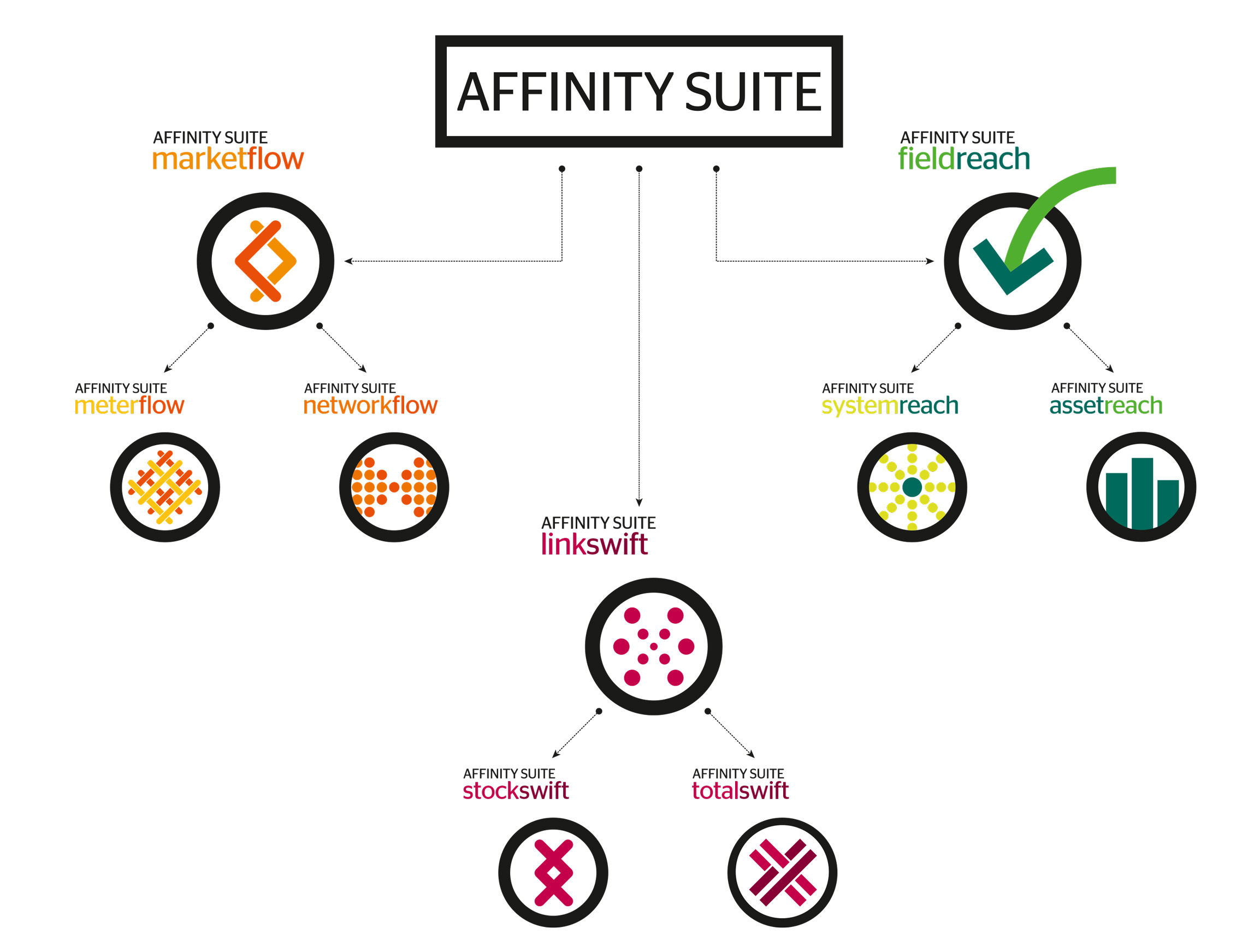
Data Transfer Solutions became MarketFlow. Field Data Capture Solutions became FieldReach. These and Meterflow were brought together under the newly named Affinity Suite, each with bold new icons and a cohesive visual system.  AMT-Sybex was acquired by Capita for €100m in 2014.

AMT-Sybex Affinity Suite product naming architecture diagram showing nine products including marketflow, meterflow, networkflow, fieldreach, systemreach, assetreach, linkswift, stockswift and totalswift with their icons, AMT-Sybex technology company M&A rebrand, by David Carroll & Co London

When ICMS, commonly referred to inside the business as ‘I see a mess’, was absorbed into the portfolio, we named it Leasepoint. Leasepoint product logo with bold blue and black lettering and dot-burst icon, an acquired brand within the AMT-Sybex portfolio, AMT-Sybex technology company M&A rebrand, by David Carroll & Co London


Frequently asked questions

What is brand architecture?

Brand architecture defines how an organisation’s brands, sub-brands, products and services relate to each other. It answers the question: should these things share a brand, have separate identities, or sit somewhere in between? Getting that structure right makes the whole portfolio clearer, more credible and easier to sell.

When does brand architecture need to be rethought?

The most common triggers are growth through acquisition, a significant expansion of the product or service range, and preparation for sale or investment. It is also worth reviewing after a merger, when two portfolios need to be rationalised into one.

Does brand architecture affect naming?

Almost always. The names you choose for products and services are inseparable from the architecture around them. Whether a product carries the parent brand name, a modified version or an entirely independent identity depends on the architectural decisions made first.

How long does brand architecture work take?

A focused architecture review, mapping the portfolio, defining the relationships and agreeing the naming logic, typically takes four to six weeks. Larger portfolios or those involving significant naming work will take longer.

How's your brand?

No pitch. No obligation. Just an honest conversation about your brand.

More Work